The backtrack
He'll stop and walk back a few feet to a spot he just passed. The scent registers a beat after he's moved on, so he goes back to read it properly.
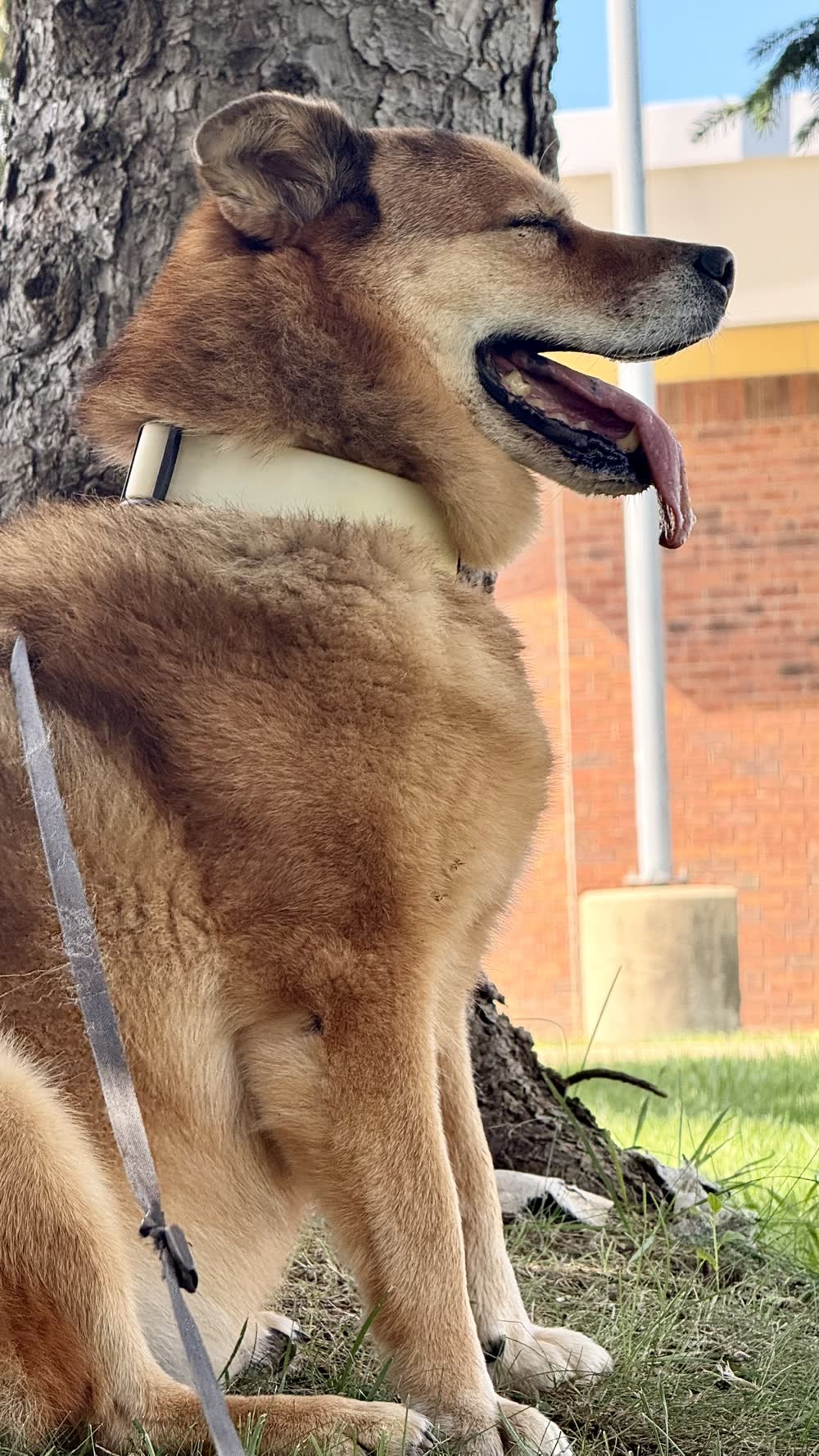
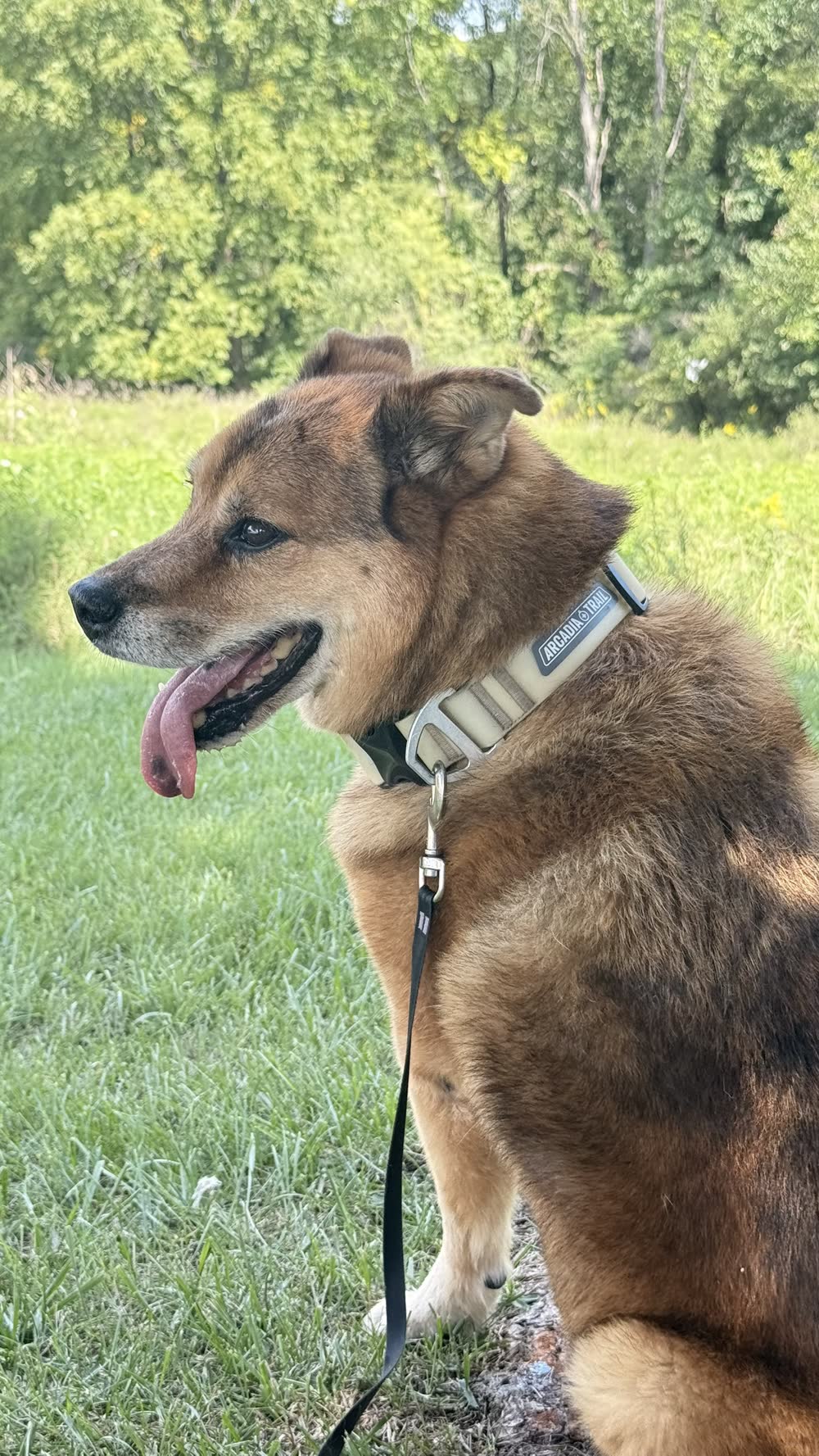
Canis familiaris, chow × shepherd. A Southwest rescue now working the woods of West Michigan.
He looks like a small bear from above, carries a lion's mane, and treats every walk as a shift on the job. He never barks at other dogs. He has caught a skunk. He would sleep outside at ten degrees if you let him.
 1
2
3
4
The shepherd side. They stand partway and tip over, which gives him the bear-cub outline from behind.
A deep russet ruff around the neck and shoulders, built for northern winters. This is the chow coat, and it's why ten degrees feels perfect to him.
Look for blue-black patches on the pink. Chows are known for dark tongues, so the spots are chow ancestry showing through.
A frost of gray around the nose that makes him look wise. Fair enough, since he usually knows where he's going.
A cream tail curled up over his back, typical of spitz-type dogs like the chow. You'll see it best from behind, out ahead of you on the trail.
Bear doesn't go for walks. He works them. Head down, trotting, checking every post along the route.
He'll stop and walk back a few feet to a spot he just passed. The scent registers a beat after he's moved on, so he goes back to read it properly.
When something is really interesting he clicks his teeth or licks the grass. That pushes scent toward the vomeronasal organ in the roof of his mouth, a second smell system tuned for animal and social signals.
On a fresh trail he casts around in loops to figure out which way the animal went, the same way a tracking hound does.
Each park has several possible routes, and he has clearly decided on one before you get there. Memory, how long since the last visit, and what the wind brings in all go into the choice.
He never empties the tank at one tree. He spreads it across thirty spots so he can sign the whole route, and he's picky about the exact height and position of each one.
After some marks he scratches the ground and throws dirt behind him. Glands in his paws add scent, and the torn-up ground is a visible sign that he was here.
He'll walk his whole body through a pine or spruce without marking it. Part scratch, part scent bath.
Given the chance he rolls his neck in wild-animal scat, almost always fox, never dog. To him it's the good stuff.
Sometimes a smell is so rich that no amount of pulling moves him. He isn't being stubborn. He just hasn't finished reading.
His reactions follow a clear logic. Size, risk, and whether something is worth chasing all count.
“I think he knows they're dogs, but I think he thinks they're broken.”His person, on small barking dogs
Two separate switches. His prey drive is cold and focused, and it runs on a different circuit from social aggression. He can catch a rabbit and then be completely gentle with every person he meets.
Velcro dog. He wants to be right next to his person every minute of the day. Rescues who started out uncertain often attach this hard once they feel safe.
Loves company. He's excited to meet other animals and has never barked at another dog.
Has opinions about who walks him. The long, structured miles are what he wants. Shorter walks with the kids have met some resistance.
Iron stomach. He eats things off the ground that would floor most dogs and never gets sick, a survival skill from his early life.
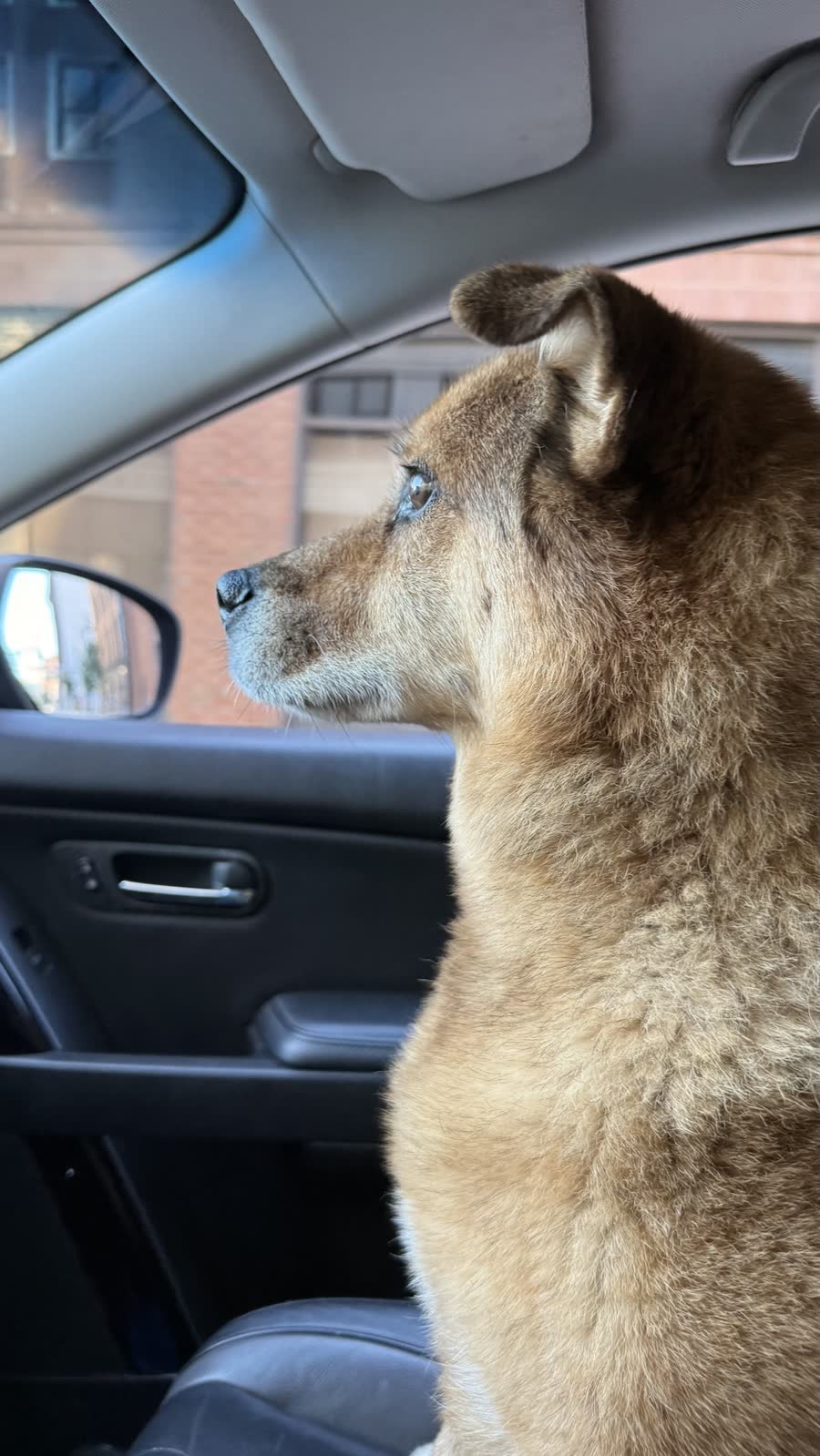
After miles of reading the woods, he plops down on the floor and is out cold. Before that, he rides shotgun and keeps an eye on the road.